

Hey Deacon!
A Light That Shines Beyond Death
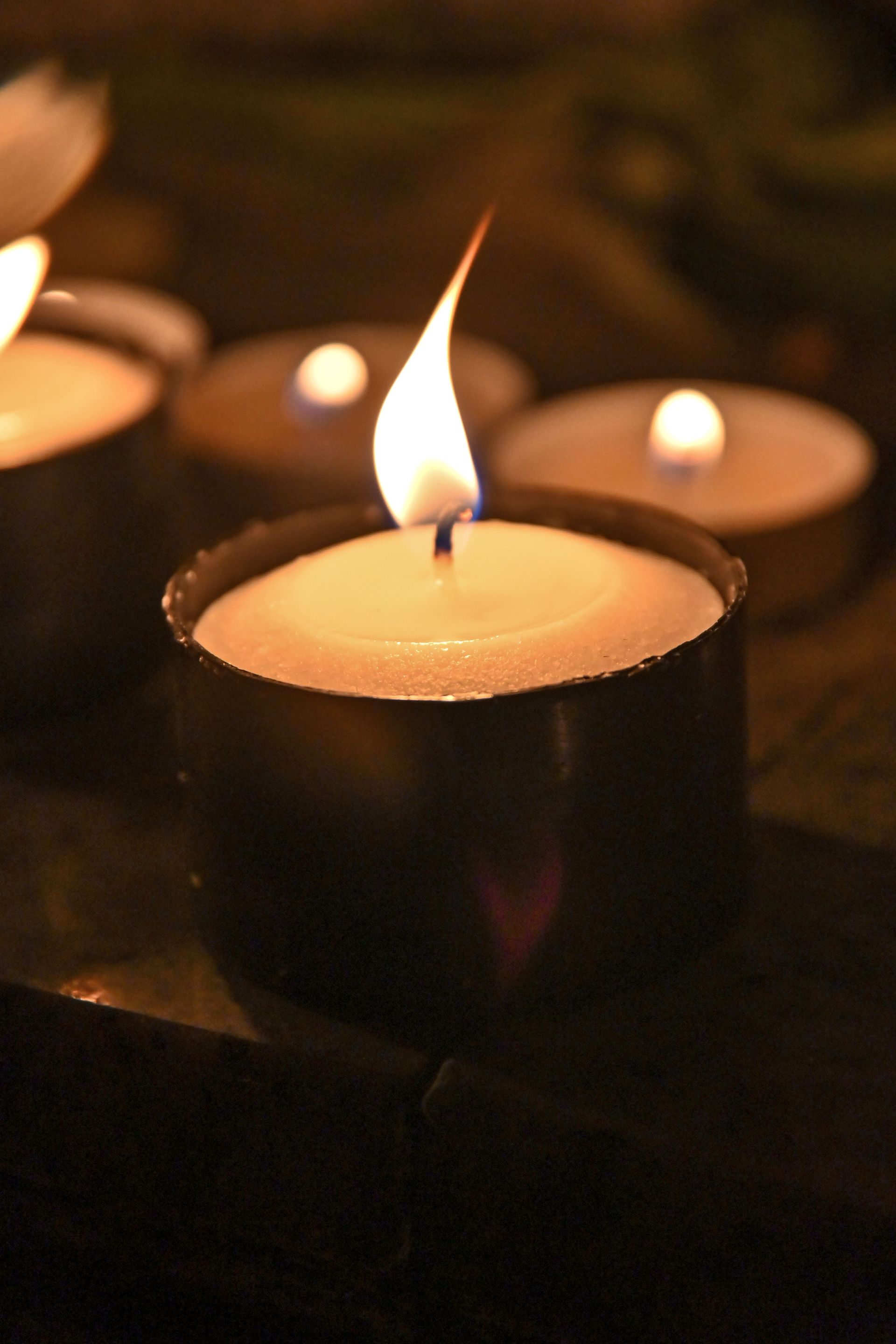
My good friend Steve Harter passed away on November 9. The sudden news of his passing hit me hard. I added Steve and his family to my prayer list, and the next day I went to church and lit a votive candle in remembrance of him and for the repose of his soul. It was a simple gesture, but one that brought me comfort and reminded me of the beautiful meaning behind this ancient Catholic tradition.
You have probably seen the stands of votive candles in Catholic churches, with their small flames continuing to burn long after the person who lit them has left. Catholics light these candles for many intentions: for the sick, for family and friends, and especially in remembrance of those who have died.
But why do we do it, and what does that little flame really mean?
The word votive comes from the Latin votum, meaning a vow, pledge, or prayer. In lighting a candle, we give visible expression to our prayer while also being reminded of the One to whom that prayer is directed: Jesus Christ, the Light of the World.
That symbolism becomes especially meaningful when we light a candle for someone who has died. Jesus said, “I am the light of the world; he who follows me will not walk in darkness but will have the light of life.”
We see this powerfully at the Easter Vigil. The church begins in darkness until the Paschal Candle is carried in and the priest or deacon proclaims, “Christ our Light.” The congregation responds, “Thanks be to God.” That flame reminds us that Christ has entered the darkness of sin and death and that darkness does not have the final word.
When we light a candle for someone who has died, we are expressing that same hope. Its flame points beyond itself to Christ and the promise of eternal life. Our prayer echoes the ancient petition of the Church: “Eternal rest grant unto them, O Lord, and let perpetual light shine upon them.”
This practice has deep roots in Christian history. Early Christians burned lamps at the tombs of saints and martyrs, and over time candles became a familiar sign of prayer and devotion. Even today, the flickering flame reminds us that Christ’s light continues to shine amid the sorrow and darkness of death.
But the candle is not a charm, nor does lighting one guarantee a particular outcome. The candle itself does not save or purify the deceased. Rather, it gives visible expression to something deeper: our prayer. Catholics pray for the dead because the bonds of Christian love are not destroyed by death. Through the communion of saints, we remain spiritually united with those who have gone before us.
The Church encourages us to pray and make offerings for those who have died. Among these, the greatest is the Holy Sacrifice of the Mass. We may also offer personal prayers, works of charity, and other acts of devotion on behalf of the deceased.
Lighting a candle can therefore express both grief and hope. We genuinely mourn those we love, yet we entrust them to the mercy of God and look forward in faith to the resurrection.
Perhaps that is what the little flame says best. As we light it and pray, our hearts quietly say: “I remember you. I entrust you to God. And I place my hope in Christ, whose light is stronger than death.”