

Hey Deacon!
Praying for Our Deceased Loved Ones: St. Faustina’s Witness
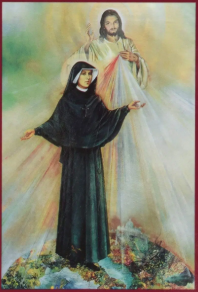
When someone we love dies, our love for that person does not simply disappear. St. Faustina Kowalska’s Diary encourages us to continue expressing that love through prayer, entrusting the departed to Jesus and asking him to show them his mercy.
In the Divine Mercy novena, Faustina records Jesus’ invitation to pray for the souls in purgatory. The prayer says that these souls are loved by God and asks that they be immersed in his mercy. It also calls the faithful to offer indulgences for them from “the treasury of My Church.” Faustina’s emphasis is not on our power apart from God, but on asking Christ to bring relief through the mercy flowing from his Passion.
The Diary describes the souls’ deepest suffering as a longing for God. In an early account of a vision, Faustina says that the souls told her this was their greatest torment. This helps explain why prayer for the dead is an act of love: we ask God to bring them closer to himself and to complete the work of purification. We may not see or understand how our prayers help, but we can offer them with confidence in God’s compassion.
Faustina’s accounts also teach perseverance. She recounts seeing a deceased sister in distress and wondering whether her condition meant purgatory or hell. Faustina continued praying. Later, the sister appeared joyful and told her that many other souls had benefited from those prayers. The sister urged her not to stop praying for the souls in purgatory. We should not use this private experience to speculate about the state of any deceased person. Its practical lesson is more modest and hopeful: keep praying, even when you cannot see the result.
The Diary offers several concrete examples. One deceased sister asked Faustina to arrange for a Mass and brief prayers; Faustina did so, and the sister later thanked her. In another account, Faustina says that she continued praying for a sister’s soul during Mass after learning of her death. These passages can encourage us to have Mass offered for our deceased loved ones and to remember them in our personal prayers.
Faustina also speaks of offering spiritual “alms” and indulgences for the dead. We can pray for a loved one, offer an indulgence for them according to the Church’s requirements, or unite an ordinary act of patience or charity to our prayer. The Diary highlights the value of prayer joined to loving sacrifice, though Faustina’s own intense language about sacrifice was addressed especially to her religious vocation.
Finally, Faustina distinguishes prayer for the dead from prayer for the dying. She describes praying the Chaplet of Divine Mercy for a person who was near death and separately recounts praying for that person’s soul after death. Both express trust in Jesus, but they concern different moments.
St. Faustina’s witness gives us a simple way to remember those we love: pray for them, ask that Mass be offered for them, and entrust them to the mercy of Christ. We cannot know the hidden state of another soul, but we can continue to love through prayer and place our hope in Jesus.